- Software Gestor para Aquicultura
- Falar pelo WHATSAPP
- contato@despesca.com.br



Solar Energy in Aquaculture: Calculate the Return on Investment to Get Rid of Your Electricity Bill

10 Promising Aquaculture Market Niches: Innovation and Profitability
07/10/2025
10 Financial Mistakes in Aquaculture That Can Sink Your Business
09/10/2025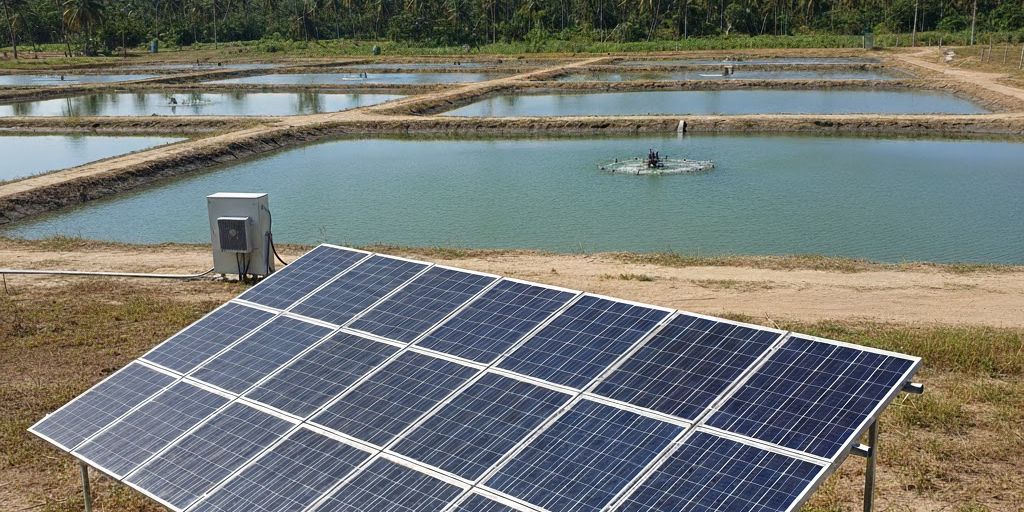
The electricity bill is undoubtedly one of the largest operational costs in modern aquaculture. Essential equipment such as aerators, pumps, recirculation aquaculture systems (RAS), and automatic feeders are major consumers of electricity. Given this scenario, implementing solar energy in aquaculture emerges not only as a sustainable alternative but primarily as a strategic investment for the financial health of the business.
This article will demonstrate the direct benefits of this technology and, more importantly, guide you, the producer, in calculating the return on investment (ROI), turning a high fixed cost into an asset for your farm.
Why is Solar Energy in Aquaculture a Strategic Investment?
Dependence on the conventional power grid exposes producers to rising tariffs and supply instability, which can lead to massive stock losses due to a lack of aeration. Solar energy mitigates these risks and offers significant competitive advantages.
Firstly, cost reduction is the most immediate benefit. Once the photovoltaic system is installed and operational, the cost of generating energy is practically zero, resulting in a drastic decrease or even the elimination of the electricity bill. Furthermore, cost predictability increases, as the producer is no longer subject to the tariff fluctuations imposed by utility companies.
Additionally, the sustainability seal added to the production becomes a market differentiator. Consumers and large retail chains increasingly value products from responsible sources, and a farm that generates its own clean energy gains brand strength and access to more demanding markets.
How to Calculate the Return on Investment (ROI) for Solar Energy in Aquaculture?
To make an informed decision, it is crucial to understand when the initial investment will “pay for itself.” The ROI calculation, although it may seem complex, can be broken down into logical steps.
Step 1: Survey of Energy Consumption
The first step is to know your consumption. Analyze your electricity bills from the last 12 months to obtain the average monthly and annual consumption in kilowatt-hours (kWh). Identify the main energy-consuming equipment and their periods of highest use. Management tools, such as Despesca, are valuable at this stage, as they allow energy costs to be directly associated with production cycles, offering a clear view of how energy impacts your production’s cost control.
Step 2: System Sizing and Budgeting (CAPEX)
With consumption data in hand, the next step is to request quotes from companies specializing in solar energy. They will design a system (measured in kWp – kilowatt-peak) capable of meeting your demand. The initial investment (CAPEX) includes:
- Photovoltaic panels;
- Inverters;
- Mounting structures;
- Cabling and protection devices;
- Installation labor and project design;
- Grid connection approval costs.
Step 3: Calculation of Annual Savings
The savings are calculated directly. Multiply your annual energy consumption (in kWh) by the average tariff (in $/kWh) you currently pay.
Annual Savings Formula: Annual Savings = Annual Consumption (kWh) × Average Tariff ($/kWh)
For instance, if your farm consumes 100,000 kWh per year and the average tariff is $0.18/kWh, your annual savings would be $18,000.00.
Step 4: The Simple ROI Formula
With the investment amount and the annual savings, calculating the payback period is straightforward.
ROI Formula (Simple Payback):
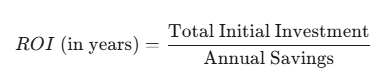
If the total investment in the system was $90,000.00 and the annual savings are $18,000.00, the ROI will be 5 years. Considering that solar panels have a lifespan of over 25 years, the farm will have at least 20 years of free energy after the investment is paid off.
Financing and Management: Boosting the Return
It is important to note that several credit lines are often available for renewable energy projects with attractive interest rates. Frequently, the financing installment amount becomes equal to or even less than the savings generated on the electricity bill, meaning the investment “pays for itself” from the very first month.
By accurately recording energy costs before and after the installation, the software provides financial reports that prove the ROI and demonstrate the real increase in profit margin. In conclusion, a data-driven management approach allows the producer to make more assertive decisions, transforming solar energy in aquaculture into a cornerstone for the sustainable growth of the business.