- Software Gestor para Aquicultura
- (85) 2139-6730
- contato@despesca.com.br



Pond Bottom Management: 10 Tips to Avoid Organic Matter

The 10 Advantages of Integrating Your Farm with the Local Ecosystem
13/11/2025
10 Questions to Ask Before You Expand Fish or Shrimp Production
16/12/2025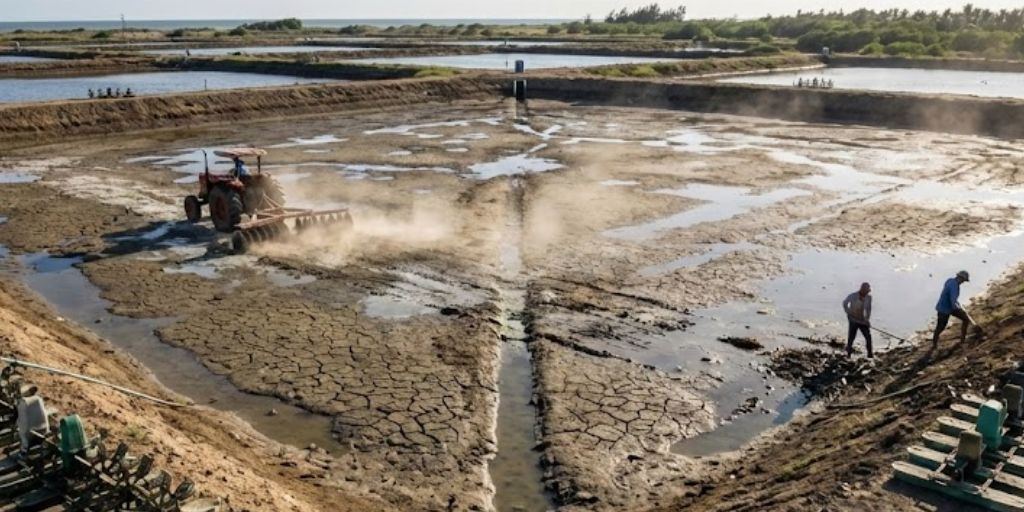
Success in shrimp and fish farming depends directly on the quality of the environment where the animals are cultured. Often, the water receives all the attention, but fundamental chemical processes occur in the soil. Therefore, pond bottom management must be a priority for any producer seeking high performance and sustainability. Excessive accumulation of organic matter can generate anaerobic zones, release toxic gases, and compromise feed conversion.
According to renowned research, such as that of Dr. Claude Boyd (1995), soil condition strongly influences the quality of the overlying water. When pond bottom management is neglected, the result is an increase in biochemical oxygen demand (BOD) and the appearance of compounds like ammonia and hydrogen sulfide. To avoid these problems and ensure the health of your culture, we have prepared 10 essential tips.
1. Perform Complete Drying Between Cycles
Exposing the soil to the sun is one of the most effective practices. Ultraviolet radiation and dehydration eliminate pathogens and oxidize residual organic matter. This process should last until the soil cracks, allowing aeration of the lower layers.
2. Correct Lime Application
Liming does not serve solely to correct pH. It acts as a catalyst in the decomposition of organic matter. Soils with neutral pH favor the action of beneficial bacteria that degrade sludge, avoiding excessive acidification of the bottom.
3. Rigorous Feeding Control
Excess feed is the main cause of organic matter accumulation. Utilizing management software, such as Despesca, allows for precise calculation of biomass and adjustment of daily feeding, avoiding waste that would turn into toxic sludge.
4. Strategic Aerator Positioning
Water circulation must be planned to concentrate residues in the “basin” or central drain of the pond. Incorrect hydraulic flow spreads dirt, hindering the system’s self-cleaning ability and harming pond bottom management.
5. Use of Bioremediators
The application of probiotics and bioremediating bacteria aids in the mineralization of organic matter. These microorganisms consume excess nutrients in the soil and water, competing with pathogenic bacteria and improving general sanitation.
6. Redox Potential Monitoring
The soil’s oxidation-reduction potential (Redox) indicates if the environment is oxidative (healthy) or reductive (toxic). Monitoring this parameter helps anticipate the formation of dead zones in the pond before they affect the animals.
7. Physical Sludge Removal (Siphoning)
In intensive systems, siphoning the bottom is indispensable. The mechanical removal of excess organic matter reduces bacterial load and alleviates the demand for dissolved oxygen, especially in the final fattening phases.
8. Appropriate Stocking Density
Respecting the pond’s carrying capacity is vital. Densities above sustainable levels generate an organic load (feces and feed) that the pond ecosystem cannot process, quickly collapsing the bottom.
9. Laboratory Soil Analysis
Periodically, soil samples should be sent for analysis. Verifying levels of phosphorus, nitrogen, and heavy metals allows for fine adjustments in fertilization and management, avoiding long-term imbalances.
10. Data-Driven Management
The historical record of each pond’s parameters is the producer’s most powerful tool. By using Despesca, it is possible to cross-reference water quality, feeding, and survival data to identify which ponds present chronic bottom problems and act preventively.
The Importance of Technology in Control
Adopting these practices requires discipline and control. The use of technological tools facilitates data visualization and decision-making. Efficient pond bottom management is not done only with manual labor, but with intelligence and strategy. By keeping the bottom clean, not only survival is guaranteed, but also accelerated growth and cycle profitability.